
The Trust Dividend: Why Carrier-Delivered Messages Feel Different
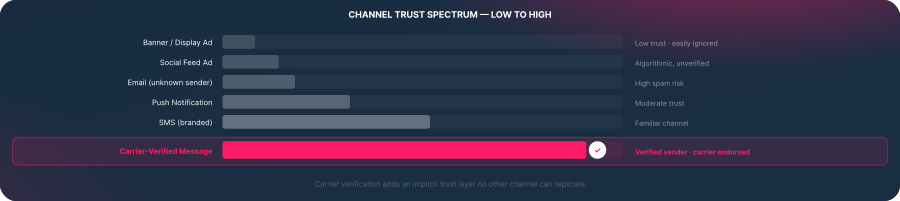
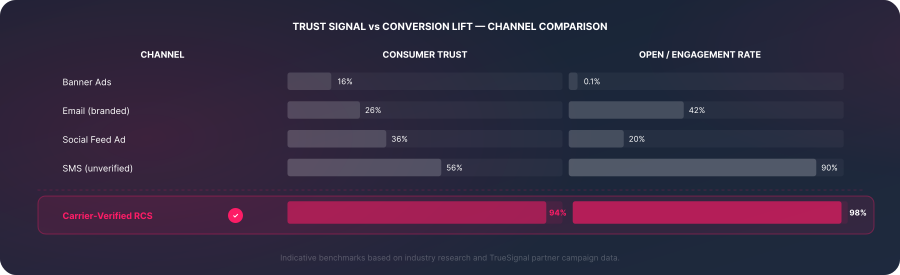
Digital advertising has a trust deficit that is structural, not cyclical. This is exactly where carrier-delivered messages break the pattern. Banner blindness was documented two decades ago and has only deepened. Social feed ads are scrolled past reflexively. Unknown-sender email sits at 26% trust in purchase contexts. And that is for email that reaches the inbox. Nearly half of all email sent, roughly 160 billion messages per day, is classified as spam before anyone sees it.
Research from Bandwidth’s 2025 State of Messaging report finds that 32% of consumers actively distrust giving brands their email address. The channel overhead of low-trust delivery is enormous: reach millions to engage thousands, spend heavily to convert few. This is the structural tax brands pay when the sender cannot be verified.
A bot cannot impersonate a carrier-verified sender. The telco channel is the only one where identity is structurally guaranteed.
Why Carrier-Delivered Messages Occupy a Different Category
Carrier-delivered messages occupy a different category in the consumer’s mental model. The relationship between a subscriber and their mobile network operator is contractual, bilateral, and long-standing. When a message arrives through that channel, it carries implicit endorsement. The carrier permitted it, the sender has been validated, the identity is real. RCS formalises this with verified sender IDs. The brand’s logo appears in the message header alongside a carrier-issued checkmark. This is not a cosmetic feature. It is a structural trust guarantee backed by the carrier’s own identity infrastructure.
Spoofing is architecturally impossible. A fraudulent actor cannot register as a verified RCS sender in the telco network. Compare this to email, where sender verification remains voluntary and inconsistently applied. Sophisticated phishing campaigns bypass it routinely. The trust premium of the carrier channel is not a positioning claim. It is a technical fact.
The Trust Dividend Across the Funnel
The commercial consequence of trust is measurable at every stage of the funnel. Higher open rates follow directly from sender credibility. A recipient who trusts the source engages rather than ignores. Higher click-through rates follow from relevance married to trust. The message is from someone they believe, about something they need.
The long-term brand equity effect compounds over time. Brands that consistently appear in high-trust channels build an association between their identity and reliability. Paid social and display spend cannot replicate it. For CMOs thinking about brand investment, not just performance metrics, the carrier channel delivers both.
The trust dividend is not a feature of any single campaign. It is the accumulated value of showing up in a channel where the consumer never wonders who is speaking to them.
SOURCES
- ↗ Bandwidth / Vonage consumer trust in digital channels survey 2025
- ↗ Twilio State of Customer Engagement Report 2025
- ↗ Sinch “Why Consumers Trust RCS” research
- ↗ Ofcom / industry spam and phishing statistics for email and social 2025