
Automotive advertising is one of the most expensive categories in digital, and one of the least precise. A new vehicle purchase happens once every seven to ten years for the average consumer. Purchase cycles are long, consideration runs for months, and intent stays almost invisible on the open web. It surfaces only once the buyer is already deep in the research funnel. Search behaviour tells you who is comparing models. It does not tell you who just decided they are ready to act. Retargeting pixels catch people who have already visited a competitor.
Cost-per-lead on third-party auto platforms averaged $45 by late 2025, up from $32 the prior year. Lead quality deterioration drives part of that, as buyers enquire with multiple dealers at once. The structural problem for automotive advertisers is not reach. It is timing. The open web cannot surface the moment before intent becomes visible in search.
Telco signals don’t catch buyers who are browsing. They catch buyers who are ready, before they open a search bar.
The Network Signals Behind Automotive Advertising
Mobile network data contains specific, observable proxies for automotive purchase readiness. They are invisible in any other data source. Device contract expiry is one of the strongest. A subscriber approaching the end of a handset contract is entering a considered-spending mindset. They are actively evaluating whether to upgrade, replace, or change provider.
This financial decision-making posture correlates strongly with willingness to consider other high-value purchases. Heavy navigation app usage is another indicator, particularly trip-planning and repeated route-mapping to new locations. It reliably signals active journey research and new geographic exploration, both linked to lifestyle transition and vehicle need.
High data consumption combined with an aging device points to a connected, tech-forward user. That profile consistently indexes for premium automotive consideration. When these signals converge in a single subscriber within a campaign window, purchase readiness rises sharply. The moment to act is now, not after three more weeks of programmatic retargeting.
From Upgrade Signal to Showroom Booking
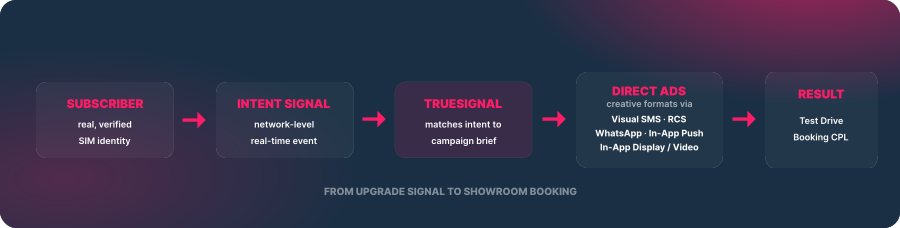
The campaign mechanic is straightforward to execute. TrueSignal surfaces the audience of verified, in-window automotive prospects within the MNO partner network. It identifies them purely through network usage patterns, device behaviour, and service activation events, with no access to message content or metadata. An RCS message is delivered at peak intent. It is branded, verified, featuring the model range and a direct “Book Test Drive” CTA.
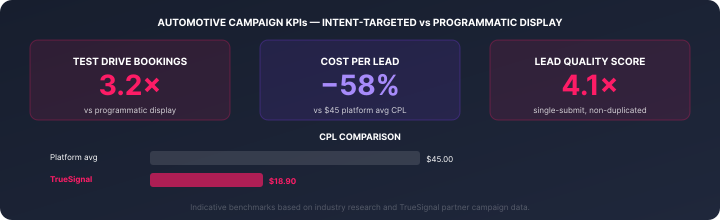
There is no landing page redirect and no separate form. The booking is made in-thread. Across TrueSignal partner campaigns in automotive, this approach has delivered test-drive booking rates 3.2 times higher than equivalent programmatic display. CPL came in at approximately $18.90 versus the $45 platform average, a reduction of roughly 58%. Lead quality scores are 4.1 times higher, measured by single-submission, non-duplicated enquiry rate.
For auto brands managing large budgets against declining lead quality, the efficiency case is not marginal. It is transformative. The upgrade moment exists in the network. The question is whether your campaign is timed to catch it.
SOURCES
- ↗ DemandLocal Automotive Lead Generation Cost Report 2025 ($45 avg CPL)
- ↗ Think with Google – Automotive Intent and Mobile Research
- ↗ Sinch / MessageFlow RCS automotive campaign benchmarks
- ↗ eMarketer Automotive Digital Advertising Trends 2025