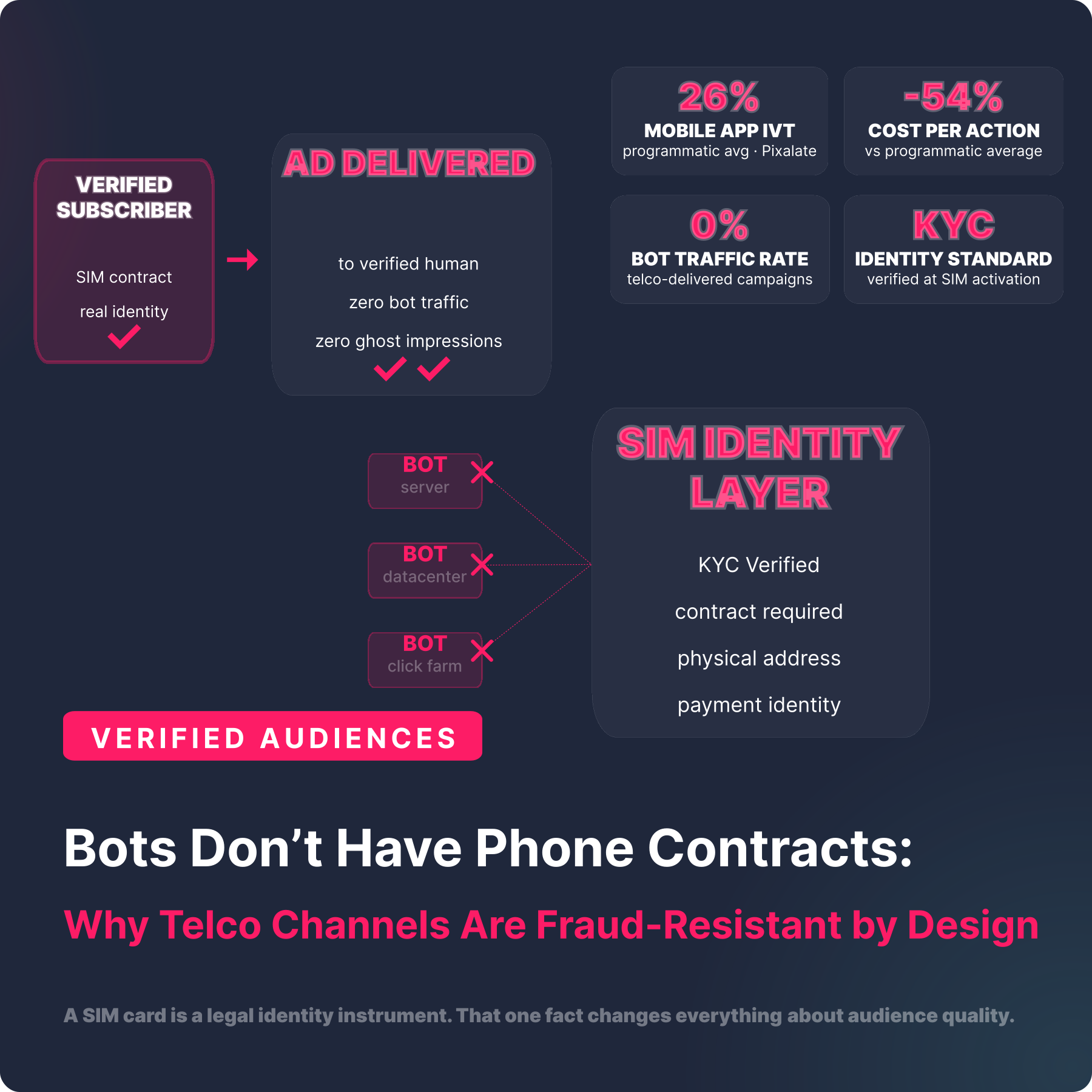
Bots Don’t Have Phone Contracts: Why Telco Channels Are Fraud-Resistant by Design
Programmatic Advertising
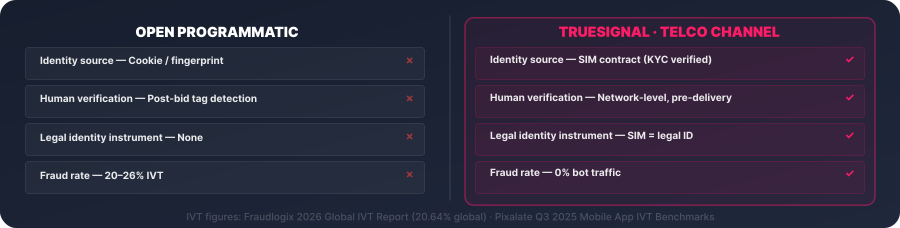
In programmatic advertising, the end recipient of an impression is unknown to the buyer. A DSP bids on a bundle of signals — a cookie, a device fingerprint, a probabilistic audience segment — but has no direct knowledge of whether a human being exists on the other side of that transaction. This is not a flaw that can be patched by better verification tooling; it is structural to the open web auction model. The result is an environment where, per Pixalate’s Q1 2025 benchmarks, 21% of web impressions and 26% of mobile app impressions are invalid traffic — generated by bots, data-centre servers, click farms, or spoofed environments that mimic legitimate users well enough to pass basic verification. In certain programmatic networks, fraud rates exceed 46%. Brands buying programmatic inventory are operating in a market where roughly one in four reported users was never a human being.
“A SIM card cannot be issued to a script. A mobile network contract cannot be signed by a data-centre server. Telco delivery is fraud-resistant by architecture, not by audit.”
The Telco Channel
The telco channel inverts this problem at the infrastructure level. A SIM card is a legal instrument: it is issued to a named individual who has undergone Know Your Customer identity verification at the point of activation. That person has provided a real name, a real address, and a payment relationship with the MNO. The SIM is physically bound to a device registered on the network. When TrueSignal triggers delivery through an MNO’s infrastructure, the message travels to a contractually verified human subscriber — not to an impression slot in an open exchange. There is no anonymous bid. There is no inventory from unverified publishers. There is no mechanism by which a bot, a click farm, or a data-centre server can receive or interact with the delivery, because none of those entities hold a SIM contract. The verification happens not at the ad-tech layer, but at the moment the subscriber joined the network — years before any campaign is briefed.
The Practical ROAS Implication
The practical ROAS implication is significant. When 26% of mobile app impressions are invalid, every metric in a programmatic campaign is overstated by a corresponding margin. Click-through rates, completion rates, and conversion counts all include a baseline level of non-human activity. Attribution models are contaminated. Budget optimisation algorithms learn from fraudulent signals. Verified human delivery is not a brand values position — it is a measurement accuracy requirement. A campaign reaching 100% verified humans produces cleaner attribution, more accurate LTV modelling, and a true cost-per-acquisition figure that is actually comparable against other performance channels. Telco-delivered ROAS is not inflated by ghost impressions or bot engagements. What you measure is what happened.
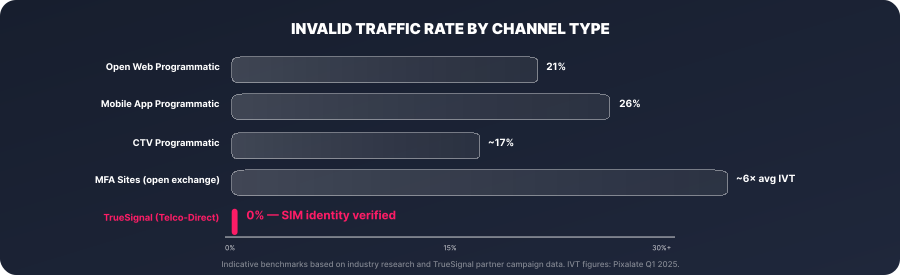
For CMOs evaluating media quality, the question to ask media partners is not “what is your IVT rate?” — it is “what is the mechanism by which fraud is impossible in your channel, not just managed?” Programmatic verification is an audit function that reduces fraud losses after they occur. Telco-direct delivery is a structural guarantee that they cannot occur at all. That distinction matters when setting media quality standards, when benchmarking true ROAS across channels, and when making the case internally for why verified human reach commands a premium — and why that premium pays for itself immediately in the elimination of invalid traffic losses, fee stack costs, and the measurement distortion that comes from campaigns contaminated by non-human activity.
SOURCES
↗ Fraudlogix — 2026 Global Invalid Traffic Report: 20.64% global IVT rate across programmatic channels
↗ Pixalate — Q3 2025 Mobile App IVT Benchmarks: 26% mobile app invalid traffic rate; fraud rates exceeding 46% in certain programmatic networks
↗ GSMA — SIM Registration and KYC Requirements Documentation: Know Your Customer identity verification standards at point of SIM activation
↗ TAG (Trustworthy Accountability Group) — 2025 US Ad Fraud Savings Report: fraud reduction outcomes in TAG-certified vs. non-certified programmatic environments